What to Look for When Buying Electronics, Tools, Toys, and Small Appliances
What to Look for When Buying Electronics, Tools, Toys, and Small Appliances
One of the best parts of shopping at a bin store is never knowing exactly what you’ll find. One day you may spot a kitchen gadget you’ve been wanting. Another day, you may come across a small tool set, a toy your kid would love, or a tech accessory that costs way more online.
That treasure hunt feeling is what makes liquidation shopping so fun.
But when you’re buying electronics, tools, toys, and small appliances, it helps to slow down for a minute before tossing something into your cart. A good deal is only a good deal if the item makes sense for you, looks usable, and fits your budget.
Here are a few simple things to check before you buy.
Start With the Box
The box can tell you a lot.
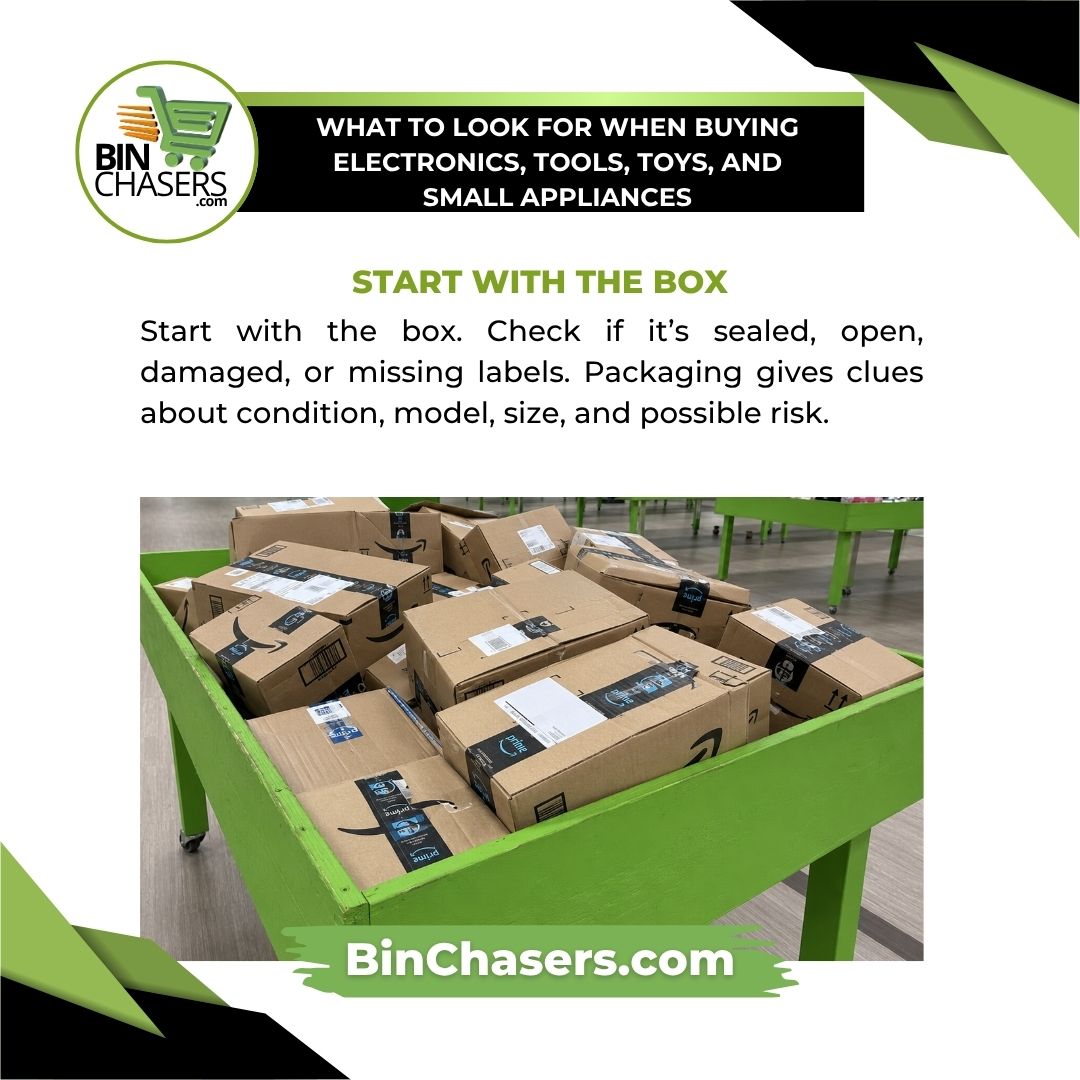
Before buying, take a quick look at the outside packaging. Is it sealed? Is it open? Is it crushed, taped, or missing parts of the label?
At a liquidation store, items may come from retail returns, overstock, shelf pulls, or open-box merchandise. That means some products may look brand new, while others may have been opened before. An open box does not always mean something is bad. Sometimes it just means the customer returned it, the box was damaged, or the item was inspected.
Still, the box gives you your first clue.
Look for model numbers, product photos, size details, and any notes on the packaging. If the box is badly damaged, be extra careful and check what you can before deciding.
Check for Missing Pieces
This is especially important with small appliances, tools, toys, and electronics.
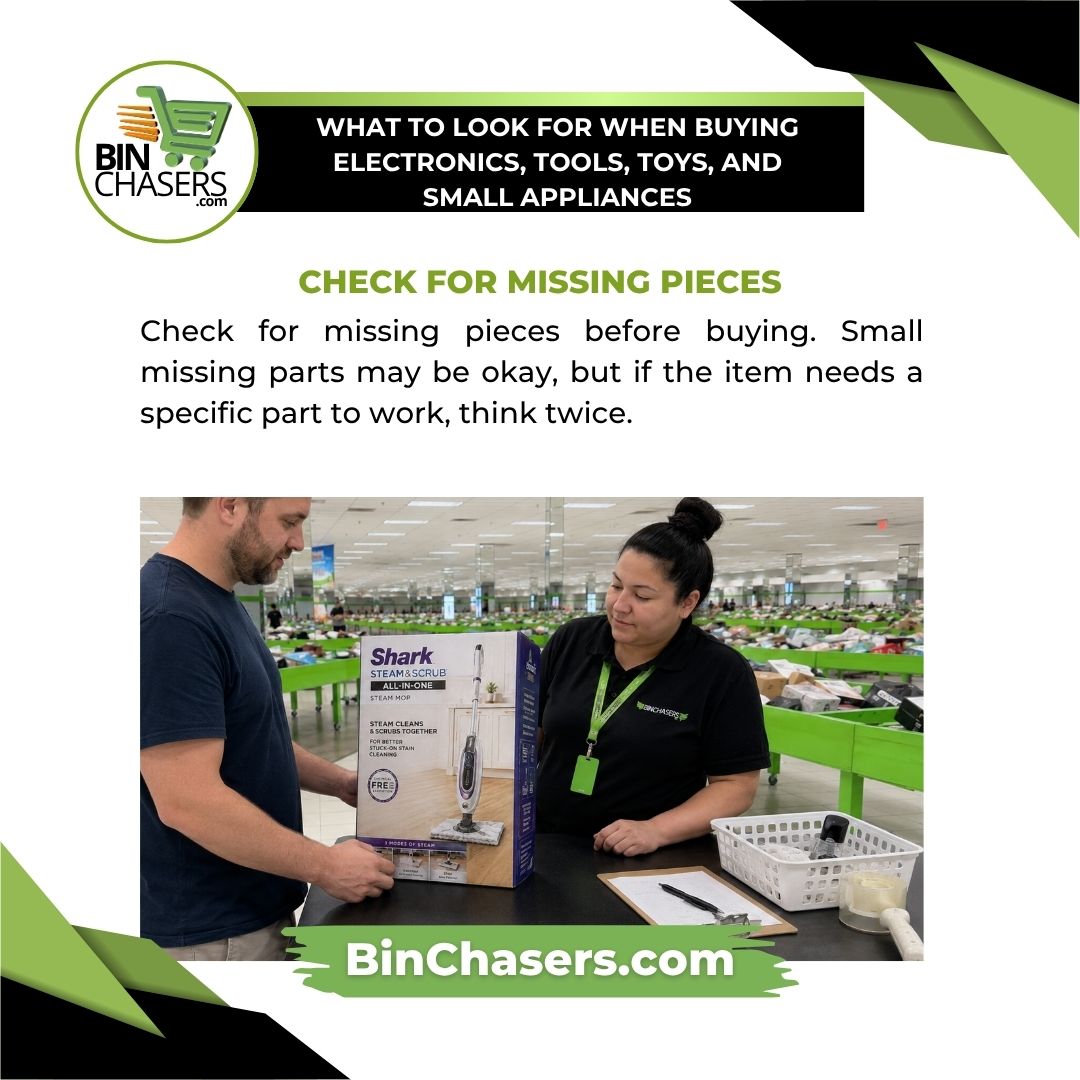
For example, if you find a blender, check if the lid, pitcher, blade piece, and power base are there. If you find a drill, see if the battery or charger is included. If you find a toy, check if the main parts are inside.
You don’t need to inspect every tiny detail like a detective, but a quick look can save you from buying something you can’t use.
Some missing pieces may not be a big deal. A missing manual can usually be found online. A missing charger may be easy to replace if it uses a common cable. But if the item needs a very specific part to work, think twice before buying.
Look at the Power Source
For electronics and small appliances, always check how the item gets power.
Does it plug into the wall? Does it need batteries? Does it use a USB cord? Does it require a special charger?
This matters because some items may not include batteries, cords, or adapters. If you already have the right cord at home, that may be fine. But if you’ll need to buy a special charger separately, add that to the total cost in your head.
A $5 item may still be a great deal, but not if you need to spend more than expected just to use it.
Search the Item Online
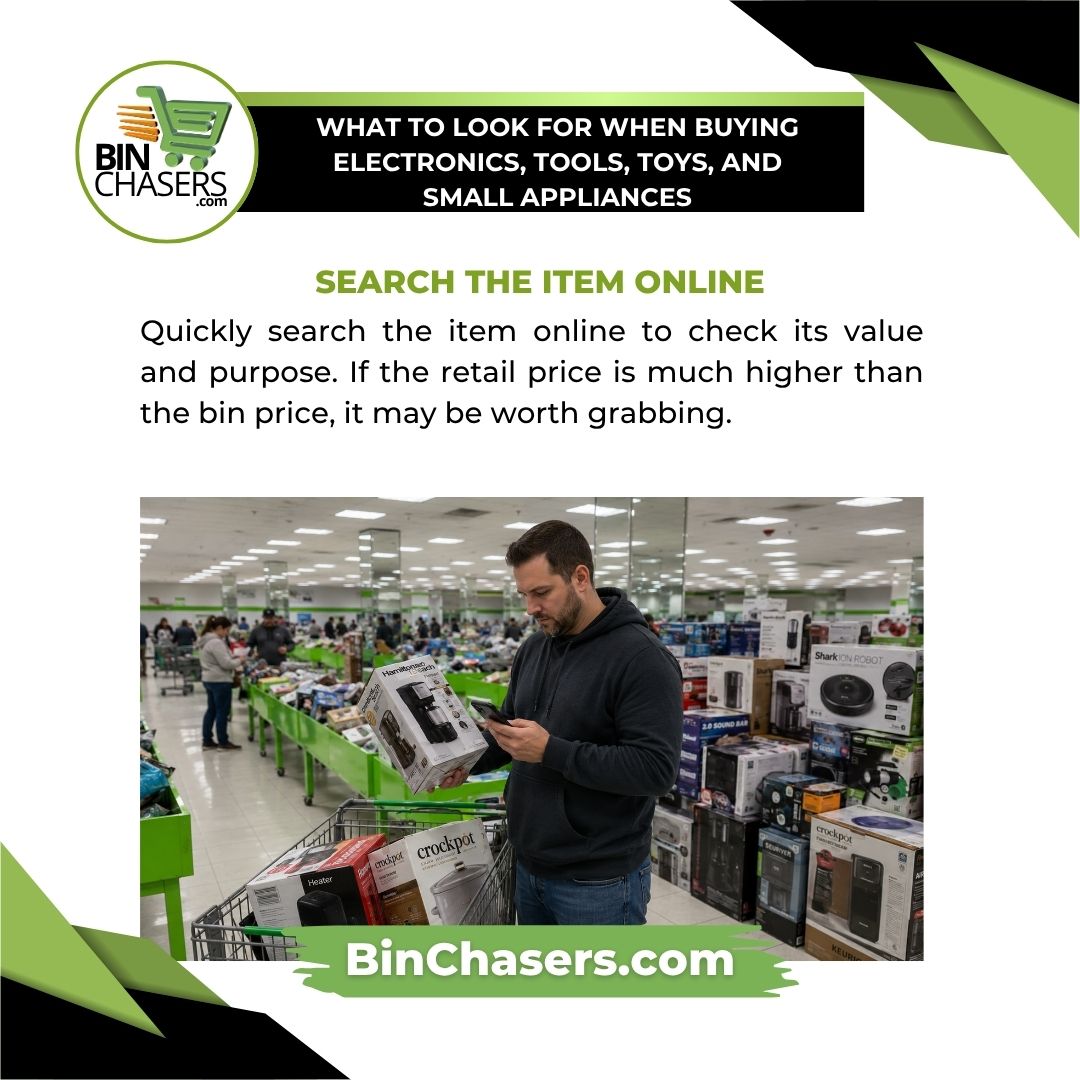
One smart shopping habit is to quickly look up the item on your phone.
Search the brand, model number, or product name. This can help you see the regular retail price, what the item does, and whether it’s something you actually want.
This is also helpful for bargain shopping because it gives you a better idea of the value. If an item sells online for much more than the bin price, it may be worth grabbing. If the online price is close to the bin price, you may want to pass unless you truly need it.
Don’t overthink every item, though. The goal is to shop smart, not stand in one spot for 20 minutes comparing every single product.
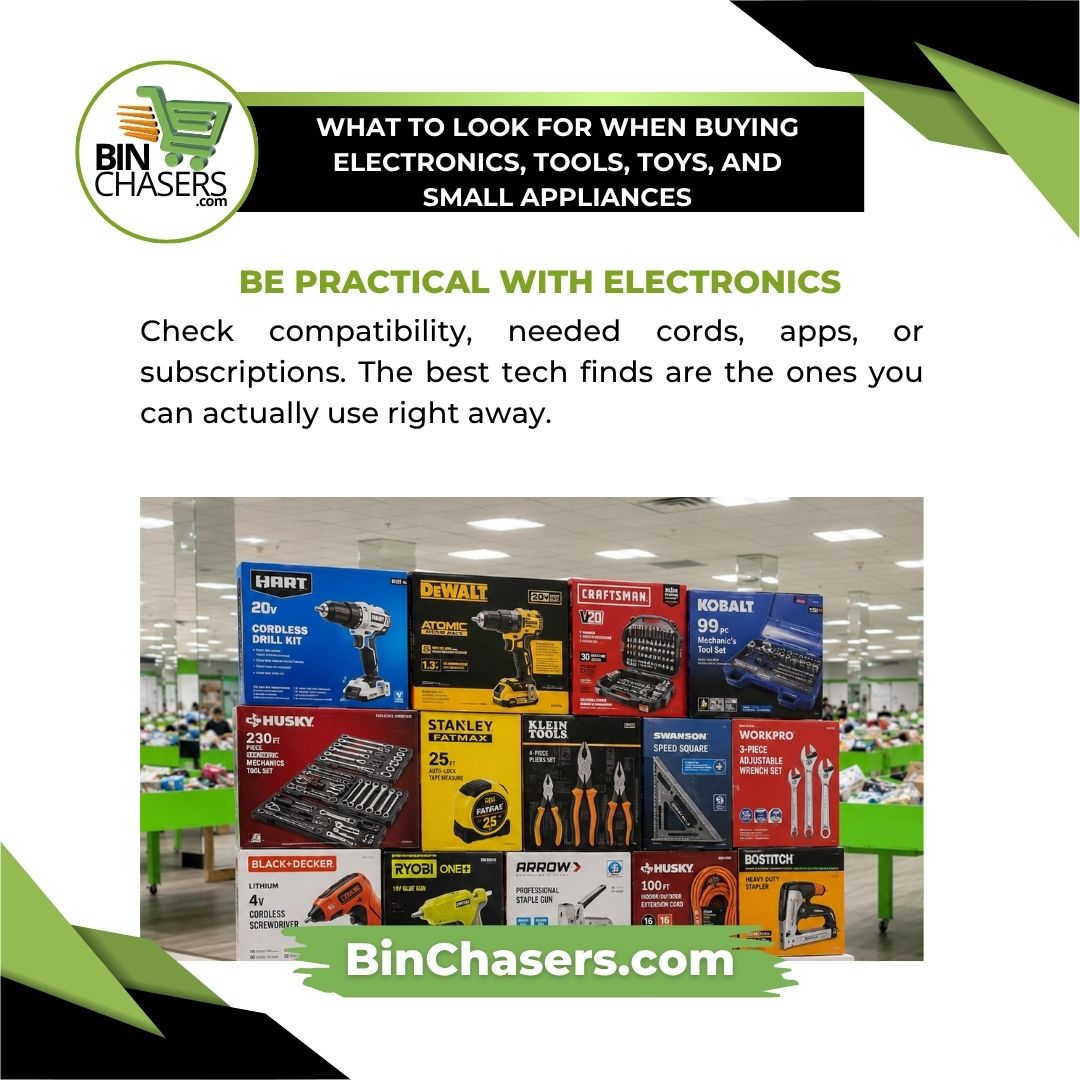
Be Practical With Electronics
Tech finds can be exciting. Headphones, chargers, speakers, smart home items, keyboards, cameras, and accessories can all show up in the bins.
Before buying, ask yourself:
Will I actually use this?
Is it compatible with what I already own?
Does it need an app, account, cord, battery, or subscription?
Is the brand familiar enough for me to feel comfortable?
Some electronics are simple. A phone stand, charging cable, or computer mouse is easy to understand. Other electronics may need more checking, especially if they connect to Wi-Fi, require a specific device, or need setup.
The best electronics deals are usually the ones that fit your life right away.
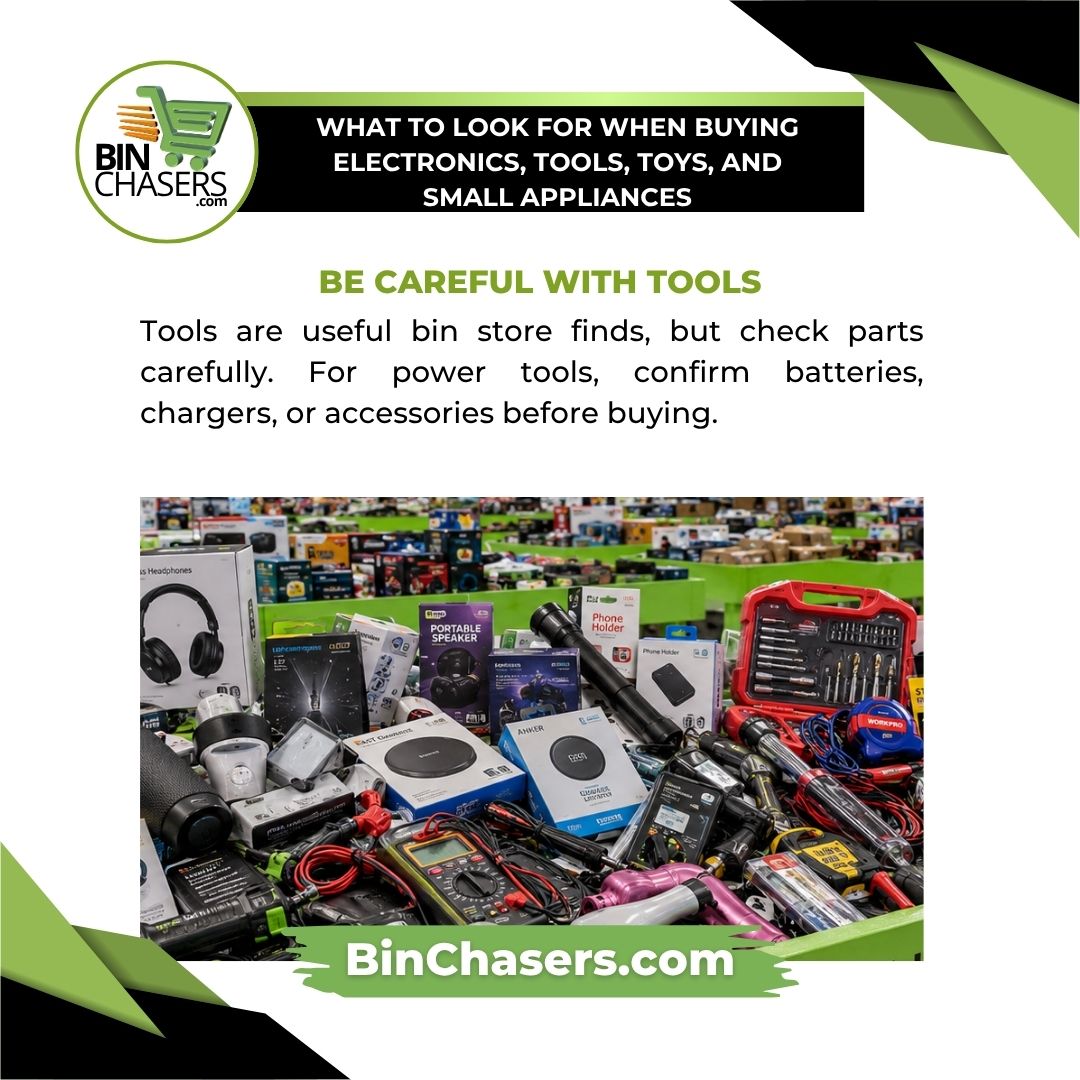
Be Careful With Tools
Tools can be great bin store finds because they’re useful around the house, garage, or workshop.
Look for hand tools, small repair kits, measuring tools, drill bits, screwdrivers, organizers, and basic home improvement items. These are often easy to inspect and useful to keep around.
For power tools, check the box and parts more carefully. Make sure you know whether the battery, charger, blades, attachments, or accessories are included. A tool can still be worth buying without every accessory, but only if you know what you’re getting.
If you’re not sure what a tool does, search it online before buying.
Choose Toys With Safety in Mind
Toys can be fun finds, especially when you’re shopping for kids, gifts, classrooms, or play areas.
Before buying a toy, check the age recommendation, small parts, missing pieces, and condition of the packaging. If the toy needs batteries, see what kind. If it has electronic features, lights, or sound, remember that you may not know if everything works until later.
For babies and younger kids, be extra careful with small parts, opened packaging, or anything that looks damaged.
A toy does not have to be expensive to make a kid happy, but it does need to be safe and complete enough to enjoy.
Think About Storage and Space
Small appliances and home gadgets can look tempting, especially when the price is low.
Air fryers, humidifiers, mixers, coffee makers, fans, food sealers, and organizers can be amazing liquidation deals. But before buying, think about where it will go.
Do you have counter space?
Do you already own something similar?
Will you use it often enough?
Can you store it easily?
Sometimes the best deal is the item you leave behind because it would only become clutter. Smart shopping is not just about saving money. It’s also about buying things that make sense for your home.
Give Yourself a Simple Rule
Before you buy, ask one simple question:
Would I still want this if it were not sitting in front of me right now?
That question can help you avoid impulse buys. It gives you a quick moment to decide whether the item is useful, exciting, practical, or just cheap.
Bin store shopping should be fun, but it should also help you stretch your money. When you check the box, look for missing parts, compare prices, and think about how you’ll use the item, you make better choices.
That’s how you turn treasure hunt shopping into smart shopping.
For more helpful finds, store updates, and deal reminders, join the BinChasers buyer list.
