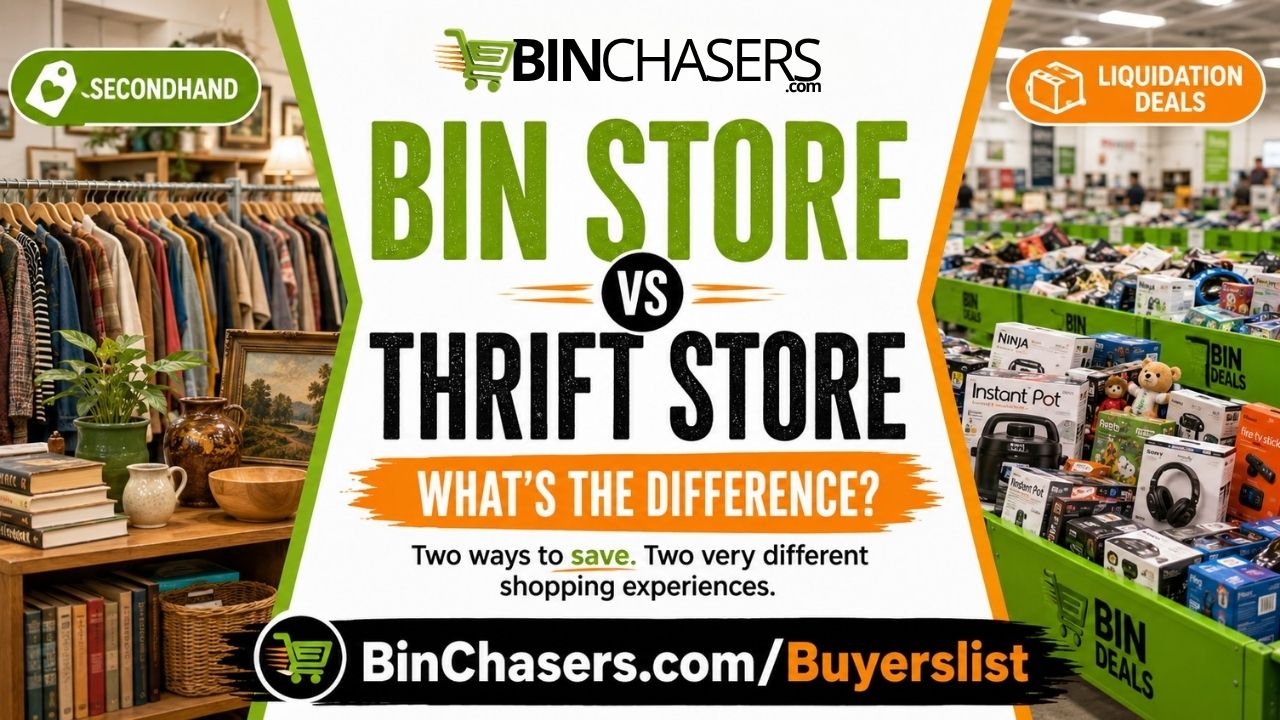
Bin Store vs Thrift Store: What’s the Difference?
Bin Store vs Thrift Store: What’s the Difference?
If you love finding a good deal, you’ve probably spent some time browsing a thrift store. But bin stores have become another favorite stop for shoppers who enjoy saving money and never knowing exactly what they might find.
At first glance, the two can seem pretty similar. Both offer discounted items, both reward shoppers who are willing to look around, and both can help stretch a household budget.
The big difference is where the merchandise comes from and how you shop for it.
Here’s a simple breakdown.

What Is a Thrift Store?
A thrift store mainly sells donated, pre-owned items.
People donate clothing, shoes, books, furniture, dishes, toys, home décor, and other household goods they no longer need. The thrift store sorts those donations, prices the items individually, and places them on racks or shelves.
The experience is usually fairly organized. Clothing may be divided by size or category, books have their own shelves, and household items are grouped together.
Thrift stores are especially useful if you enjoy searching for inexpensive clothing, vintage pieces, used furniture, books, or unique home décor.
Because most merchandise has been owned before, checking the condition is an important part of thrift shopping.

What Is a Bin Store?
A bin store usually gets merchandise through liquidation rather than donations.
Inventory can include retail returns, overstock, open-box merchandise, shelf pulls, and other goods moving through the retail and liquidation supply chain.
Instead of pricing and displaying every item on a traditional shelf, much of the merchandise is placed inside large bins for shoppers to look through.
That creates the treasure hunt shopping experience bin stores are known for.
At a bin store, you might uncover kitchen gadgets, organizers, toys, tools, electronics, beauty products, household supplies, accessories, small appliances, or something completely unexpected.
The inventory changes regularly, so every visit can feel different.

Where the Merchandise Comes From
This is probably the easiest way to understand the difference.
Thrift stores: Mostly donated, secondhand merchandise from individuals.
Bin stores: Mostly liquidation inventory such as retail returns, overstock, open-box items, and other discounted retail merchandise.
Because of this, bin store shoppers often see more items in retail packaging.
You might find something still sealed in its original box sitting next to an open-box item or a customer return.
That variety is part of the appeal, but it also means smart shoppers should always inspect what they are buying.

The Pricing Can Be Very Different
Thrift stores typically price merchandise individually.
A shirt might cost one amount while a lamp, book, or piece of furniture has its own price.
Many bin stores use a simpler pricing system where items in the bins share the same price or prices drop over time.
This creates an interesting choice for shoppers.
Shop when inventory is freshly stocked and you may get more selection.
Shop after prices have dropped and you may save more—but some popular items may already be gone.
There isn’t necessarily a right answer. It depends on whether you care more about selection or getting the lowest possible price.

The Shopping Experience Is Different Too
Thrift shopping usually feels more like browsing a traditional store. You move from section to section and look through racks and shelves.
Bin shopping requires more digging.
You may move items around, check boxes, read labels, look up model numbers, and inspect products before deciding what deserves a spot in your cart.
Sometimes the best find is sitting right on top.
Other times, it is hiding underneath several things you would never buy.
That’s why people who enjoy bargain hunting often like bin stores. Finding something useful for much less than expected makes the searching feel worthwhile.
Which One Should You Shop?
Why choose only one?
A thrift store can be great when you need inexpensive clothing, secondhand furniture, books, décor, or vintage finds.
A bin store may be a better fit when you enjoy discount shopping for retail-style merchandise such as household items, electronics, tools, toys, organizers, kitchen products, and other liquidation deals.
Both can be part of a smart shopping routine.
The key is knowing what each type of store does best.
Smart Tips for Shopping Both
No matter where you shop, don’t buy something just because the price looks good.
At a thrift store, check for stains, cracks, missing pieces, unusual wear, and other damage.
At a bin store, inspect the packaging, check for missing parts, read product labels, and look up an item when you need more information.
And ask yourself one simple question:
Will I actually use this?
A bargain that sits untouched in a closet isn’t really saving you money.
Shopping with a general goal while staying open to unexpected finds gives you the best of both worlds.
Two Different Ways to Find a Great Deal
Thrift stores and bin stores both make affordable shopping more interesting, but they do it in different ways.
Thrift stores give secondhand goods another life. Bin stores give shoppers access to liquidation merchandise, retail returns, overstock, open-box products, and plenty of hidden deals.
If digging through bins and never knowing what you might uncover sounds fun, give treasure hunt shopping a try.
Join the BinChasers buyer list and stay connected for more ways to shop and save.
