From $8 Bin Find to $80 Resale: How to Spot Items Worth Flipping
From $8 Bin Find to $80 Resale
There is something exciting about finding an item in a bin store that looks ordinary at first, then realizing it could be worth much more than the price in front of you.
That is a big part of what makes bargain shopping so much fun. You are not just digging through random products. You are looking for useful items, hidden deals, and sometimes something you can resell for a nice profit.
An $8 bin find becoming an $80 resale is definitely possible. The trick is knowing what deserves a closer look and what is better left in the bin.
Why Bin Stores Can Be Great for Resale Finds
Bin stores often carry merchandise from retail returns, overstock, open-box inventory, and liquidation deals. Because of that, you might find everything from small appliances and home organization products to toys, tools, electronics, pet supplies, and tech accessories.
The condition can vary too. One box might be completely sealed while the item next to it has damaged packaging or missing parts.
That variety creates the treasure hunt shopping experience people enjoy. You never know exactly what you are going to find.
For someone interested in resale, that also means there can be opportunities hiding among everyday products.
Start With Things People Actually Want
A good resale find usually starts with demand.
You do not have to become an expert in every product category. Instead, pay attention to items that people commonly use and regularly search for.
A small kitchen appliance from a recognizable brand, a popular storage solution, a useful tool, or a name-brand toy may be easier to sell than something unusual that only appeals to a small group of buyers.
Ask yourself a simple question: Would someone actively look for this?
If the answer is yes, it is worth checking a little closer.
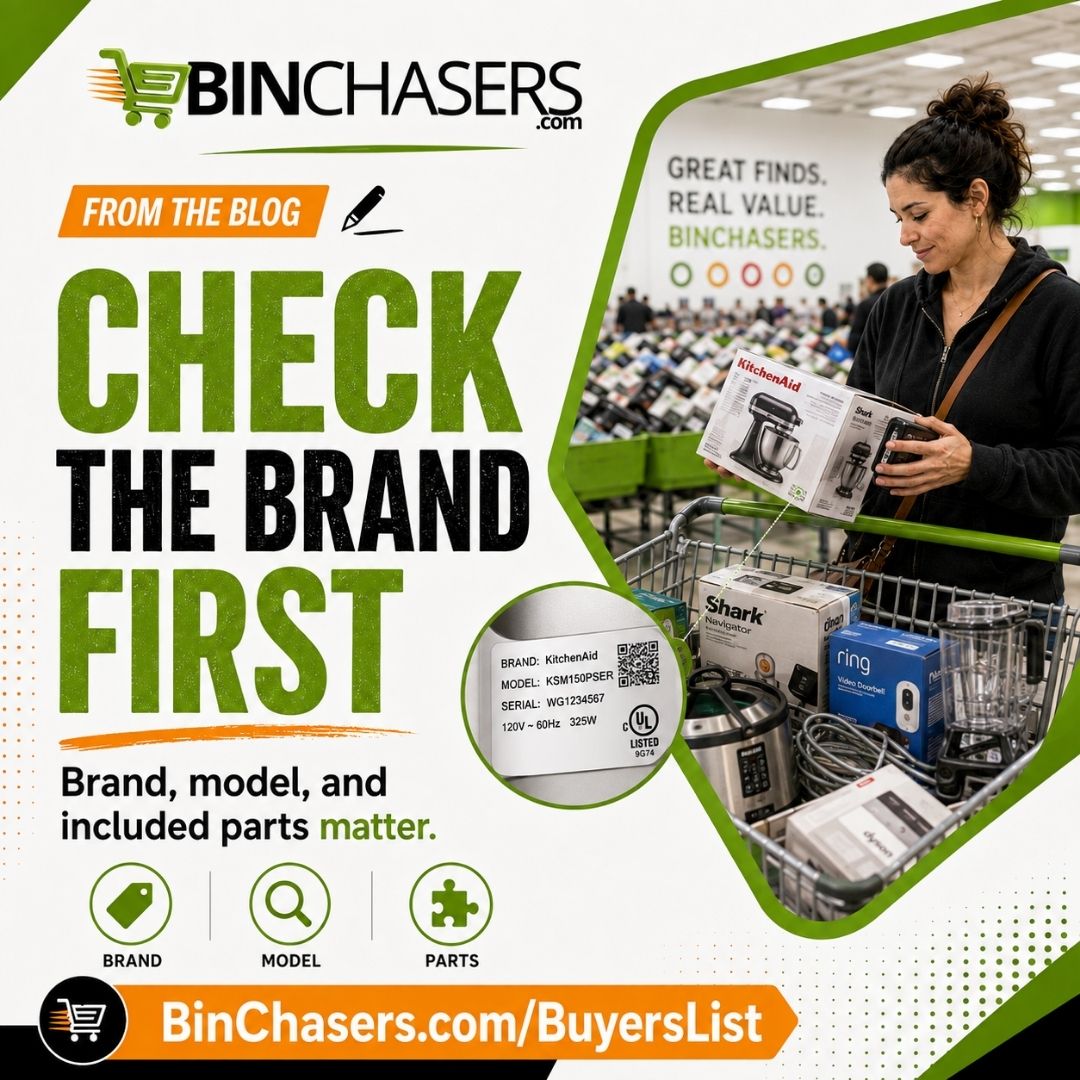
Check the Brand and Model
Recognizable brands can make resale easier because buyers already know what they are looking at.
Before getting excited about the price, check the packaging carefully. Look for the brand, model number, product size, version, and any information about what should be included inside.
This matters more than it seems.
An appliance that normally sells for a good price may not be worth much if an important attachment is missing. A tech accessory may look valuable until you realize it only works with an older device.
Taking a few extra seconds to identify the exact product can prevent a bad buy.
Check Realistic Resale Value
This is where smart shopping beats guessing.
Search for the exact item online before buying it. Whenever possible, use the brand and model number instead of a general product description.
Pay attention to what similar items are actually selling for instead of focusing only on the highest asking price you can find.
Someone can list a product for $100. That does not mean anyone is willing to pay $100 for it.
If you buy something for $8 and similar items regularly sell for $60 to $80, that starts to look interesting. But you still need to think about condition, selling fees, shipping, and how much work it will take to make the sale.
The biggest number on the screen is not always the most realistic number.
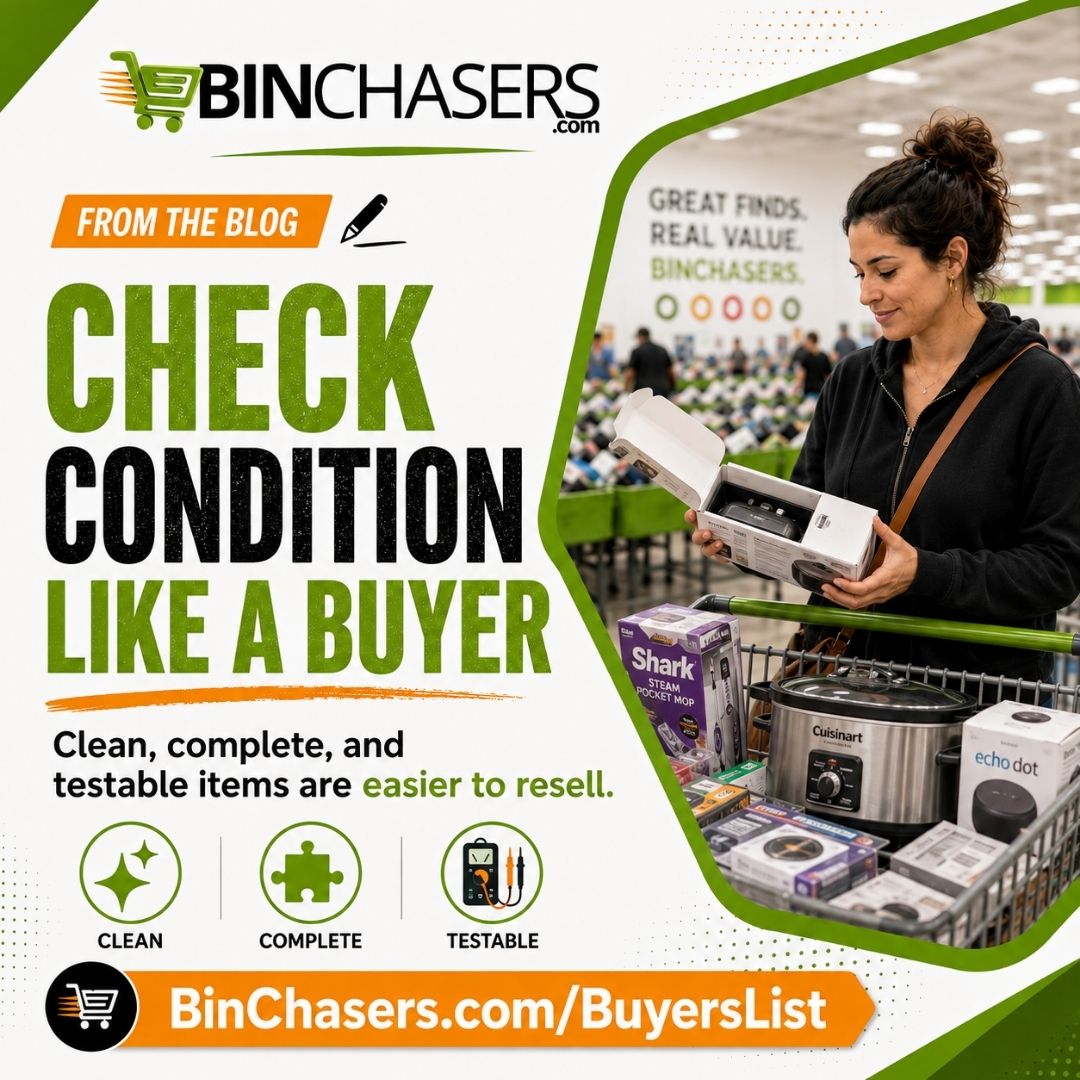
Look at the Item Like a Buyer Would
Before thinking about profit, imagine you are the person buying the item from you.
Would you feel comfortable paying for it?
Check whether the product looks clean, whether the packaging is badly damaged, whether important parts are included, and whether there are signs of heavy use.
Open-box does not automatically mean something is wrong. Plenty of open-box products can still be excellent liquidation deals.
The important thing is knowing what you are buying.
If you cannot test the item, remember that there is more risk involved. That does not always mean you should pass, but the potential profit should make that risk worthwhile.
Expensive Looking Does Not Always Mean Profitable
One of the easiest mistakes in bin store shopping is assuming that anything large or expensive-looking must be a great flip.
Sometimes smaller products are actually much easier to resell.
A large item may take up storage space, require an awkward meetup, or cost too much to ship. A smaller product with steady demand can often be listed, stored, and sold much more easily.
Think beyond the possible selling price.
Think about how long it may take to sell, how easy it is to explain to a buyer, where you will keep it, and how much effort the entire sale will require.
A $30 profit that takes very little work can sometimes be better than chasing a $70 profit on something that sits around for weeks.
Keep the Resale Process Simple
You do not need a complicated system to start flipping bin store finds.
Clear photos and an honest description go a long way. Include the brand, model, size, condition, and whether the product is new, open-box, used, or untested.
If you plan to sell locally, focus on items that are easy to carry and meet buyers with. If you plan to sell online, think about package size and shipping costs before buying.
A great bargain can stop being a great bargain when shipping takes most of the profit.
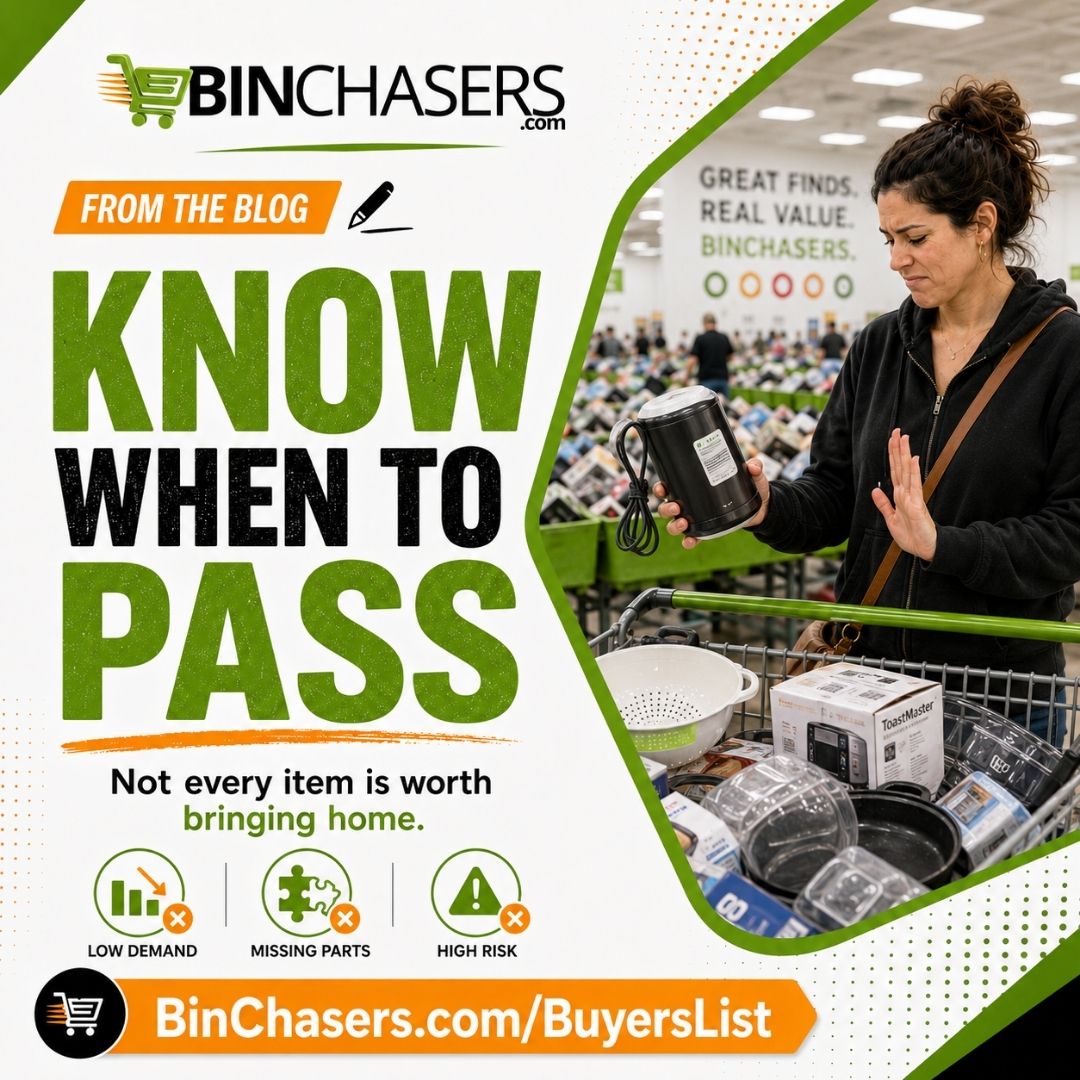
Knowing When to Pass Is Part of the Skill
Not every interesting item needs to come home with you.
Sometimes the smartest bargain shopping decision is putting something back.
The goal is not to fill your cart with products that might sell. The goal is to find items that make sense for your budget, your available space, and the amount of effort you want to put into resale.
The more you shop, the easier this becomes.
You begin recognizing brands, noticing products with steady demand, spotting missing pieces faster, and understanding which deals are actually worth your time.
That is when treasure hunt shopping becomes less about luck and more about experience.
Turning an $8 bin find into an $80 resale can happen, but the real win starts before you reach the checkout.
Check the brand. Look at the condition. Compare realistic selling prices. Think about shipping, storage, and how easily you can find a buyer.
Some visits may lead to a resale find. Other times, you may simply discover something useful for your own home at a fraction of the regular price.
Either way, knowing how to slow down and check the numbers can help you become a smarter bin store shopper.
Join the BinChasers buyer list and stay connected for more bargain-shopping finds and updates.
FAQ
Can an $8 bin store item really resell for $80?
Yes. If the item has strong demand, good condition, and a realistic resale value, a low-cost bin find can sometimes sell for several times what you paid.What types of bin store items are best for resale?
Items with steady demand usually work best, especially recognizable brands, useful household products, small appliances, tools, toys, tech accessories, and storage products.How do I know if a bin store item is worth flipping?
Check the brand, model, condition, included parts, demand, and realistic selling price before buying.Should I check resale prices before buying an item?
Yes. Look up the exact brand and model and compare what similar items are actually selling for, not just the highest listed price.Why does the brand matter when reselling bin store finds?
Recognizable brands are often easier to sell because buyers already know and trust the product.Are open-box items good for resale?
They can be. Open-box items may still be great finds if they are complete, clean, and in good condition.What should I check before buying an item for resale?
Make sure the item has the important parts, shows no major damage, matches the correct model, and has enough resale value to justify the cost and risk.Is a high retail price enough to make something a good flip?
No. An expensive-looking item may still be difficult to sell, expensive to ship, or too niche for most buyers.Should I think about shipping before buying a resale item?
Yes. Large or heavy products can quickly reduce your profit because of shipping costs and extra handling.When should I pass on a bin store item?
Pass when the demand is weak, condition is questionable, important parts are missing, shipping is too expensive, or the possible profit is not worth the effort.
